
Models
Each model type is its own parametric engine with a common output: 3D surfaces, flat panels, layout drawings and metrics. Here is where each one stands.
In use
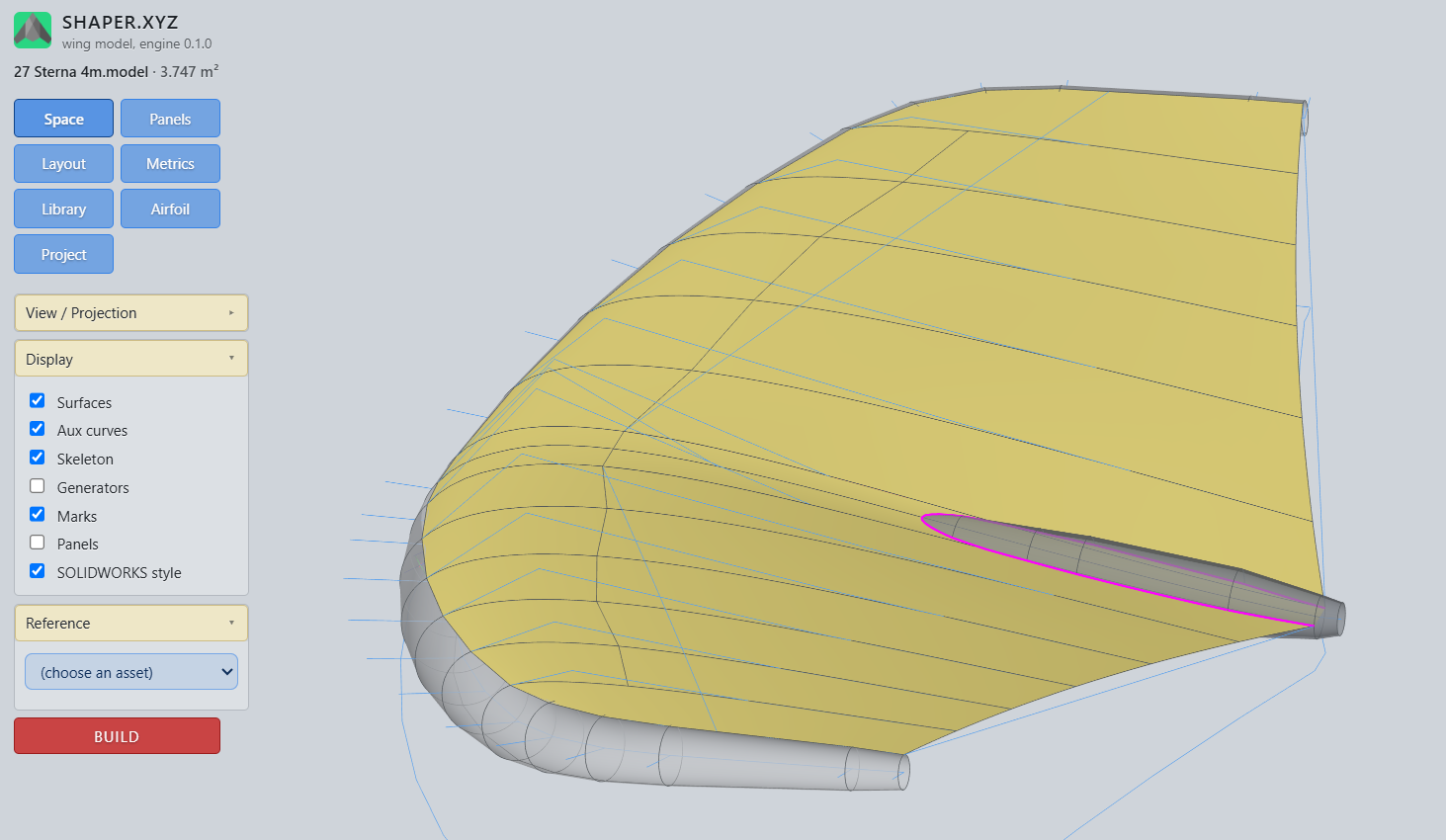
Wingfoil and kite-style wings: leading-edge tube, struts, canopy. Panels unrolled with seams and marks, a layout map for cutting, full metrics. Used to build real prototypes.
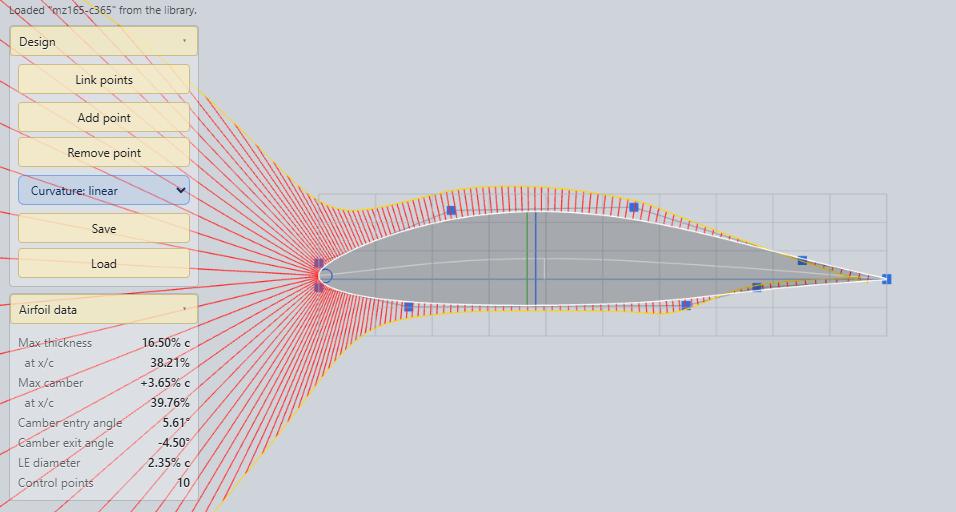
Design an airfoil in the browser: drag the control points of its NURBS curve, read its thickness, camber and curvature as you shape it, and download it as a .dat. No sign-in.
The Airfoil Library: about 700 airfoils from the UIUC Airfoil Coordinates Database, Prof. Michael Selig. How to use it.
In development
Lofted lifting surfaces with per-station airfoils, twist and dihedral - for foils, tail surfaces and aircraft wings. A basic morphing tool comes first.
Blade geometry from airfoils along a lofted path, plus blade count - the same lofting core as the rigid wing, arranged as a rotor.
Planned
Leading-edge inflatable kites, sharing the tube and canopy engine of the wing.
Mast, fuselage, front wing and stabiliser as one model - several lofts, one parameter file.
Windsurf and sailboat sails: membrane panels, luff curves, layout for cutting.
Surf, SUP, wingfoil and windsurf boards - rocker, outline, rails, volume.
Boat hulls with hydrostatics: displacement, centres, stability curves.
The propeller engine at another scale, with the aerodynamic analysis to match.
Ram-air canopies: cells, ribs, line geometry.